
Once the rain sets in, expect highs in the low 30s with heavy humidity, and storms that build through the afternoon. The build-up months before it, October to December, can push past 40°C in Kakadu. Mornings are the best window. Start outdoors early, wrap up by lunch and use the middle of the day to cool off. On days forecast at 36°C or more, the park asks walkers to set off before 9 am and stay off the track from 1 pm to 6 pm.
That leaves long evenings indoors. A storm night in a motel room or a cabin is quiet, and coverage thins out fast once you leave Darwin and Jabiru. Load things before you go: downloaded shows, a book, a podcast queue, and an entertainment platform like SlotOnline Studio for the evenings when you do have a signal.
Kakadu does not shut for the season. Individual roads, tracks and sites do, and they can close at short notice when the water rises.
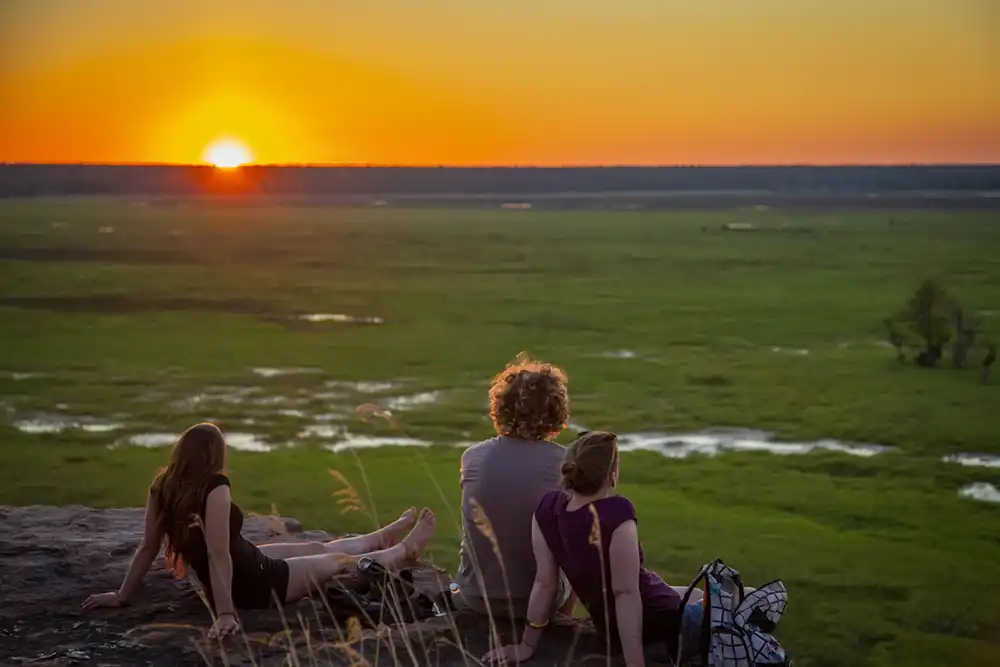
Yellow Water Billabong, Burrungkuy (Nourlangie) and the Nawurlandja lookout usually stay reachable through much of the wet. Rain suits them. The wetlands are full and the wildlife is busy.
Closures follow a pattern. Last year Gunlom closed in mid-October, Maguk and Mardukal Campground One followed in mid-November, and four billabongs, including Four Mile Hole and Red Lily, shut around the same time. Many of the longer stone country walks are closed from 1 October. Dates shift with the heat and the rain, so use last year's as a guide, not a timetable.
One area is off the list for a different reason. The Jim Jim and Twin Falls district stays closed through 2026 while the park upgrades its roads and facilities, so don't build a trip around it.
Flooding is the real limit. Park roads are treated as impassable once water reaches roughly 30–50 cm, and they are formally closed at 50 cm. Never drive through water over a road, however shallow it looks. The park's Kakadu Access Report and the Northern Territory's Road Report website are the places to check, and they need checking on the day, not the night before.
Plan for the day a road closes. It happens to someone on every wet season trip, and it is usually an afternoon, not a week. Keep a plan B close: a long lunch in town, a museum, or something on the phone. Streaming, audiobooks or slot online all work while you wait for the water to drop.
Sort the vehicle side early. Britz says its Darwin and Alice Springs branches are typically closed from 1 December to 31 March, with exact dates varying by season, so campervan and 4WD plans for the peak wet need confirming well before you fly. Ask any hire company whether unsealed roads are covered at all.
Swimming spots close for the season for a good reason. Saltwater crocodiles move into creeks, billabongs and plunge pools as the water rises. Stay out of natural water across the Top End in the wet, with or without a sign. Keep back from floodplain edges and boat ramps too.
Storms bring lightning. When thunder starts, get off exposed lookouts and out of the open. Rivers can come up fast, even when the rain is falling somewhere else.
Keep the route short. Pick a base in Darwin and one in or near Kakadu, and skip the long loops that need every road open. Add a spare day to each leg. Book accommodation you can change, and look at road and park notices before you leave each morning.
Decide your early starts the night before. Do the big outdoor thing first, and leave the afternoon open for weather. Done that way, the wet season is a quieter, greener way to see the Top End.
This
website developed and maintained by Travel Australia Network & Blogticles Australia for Australian and International providers ©
last updated
30-Oct-2026
|