
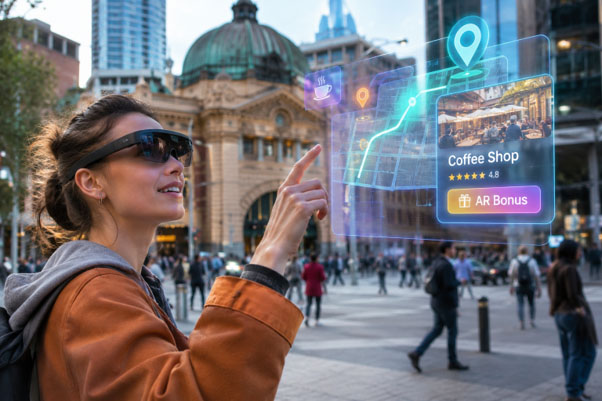
Remember when staring at Google Maps on your phone felt futuristic? That’s about to look as quaint as a paper street directory. By 2026, the way we navigate, shop, and even socialise in Australian cities is undergoing a radical shift.
A persistent digital layer, accessed through smart glasses or phone screens, is being draped over our physical streets. This is about a fundamental change in how we experience urban life.
This article explores how this emerging “game layer” could reshape everyday routines, from grabbing a morning coffee to unwinding in the evening. The shift also extends to digital entertainment, as Australians increasingly embrace mobile gaming beyond the living room, from casual games and streaming services to online casino platforms featuring fast withdrawal casino australia options that allow players to access games and manage their winnings on the go.
The morning commute in Sydney or Melbourne no longer starts with a GPS voice. It starts with a gentle, glowing path on the pavement, visible only to you. This AR layer prioritises experience over efficiency.
Fancy a stress-free walk? It guides you through a quiet park in Paddington, away from the construction din on the main road.
Keen for a hit of culture? As you pass the Sydney Opera House, a quick glance might trigger a mini-documentary about its construction, with archival footage overlaid on the real shells.
For the spontaneous casino punter, the system could even highlight a quiet corner in Fed Square perfect for a quick, responsible flutter on your phone. Imagine spotting a Royal Reels online casino promotion floating above a secluded bench, offering a bonus round if you sit there.
It’s all about context, turning the city from a maze into a personalised adventure.
Retail therapy gets a massive virtual upgrade. Walk down Chapel Street or Queen Street Mall, and the shop windows come alive. Point your device at a pair of Blundstones, and you’ll see a 3D model, price, and a reel of your mates who’ve bought them (with their permission, of course).
But the real game-changer is the hunt. Instead of email spam, discounts are now AR artifacts you need to find. A notification pings: “Spotted: 25% off cold brew at a hidden gem in this laneway!” You follow the shimmering trail to a tiny café and “capture” a digital kangaroo token.
This gamification turns shopping into an interactive exploration. The thrill is not unlike scrolling through the vibrant games at a top Royal Reels casino Australia. The next click can reveal a casino bonus.
The way we meet people is getting a virtual twist. The social media profile is escaping your phone and entering the air around you.
Opt-in AR statuses float above people in crowded pubs or at markets like Adelaide’s Central. A “Open to chat about footy” tag over someone at the bar, or a “Looking for a fourth for beach cricket” in Bondi.
It sounds full-on, but it cuts through the awkwardness. Spontaneous events pop up on the city layer: an impromptu AR art show in a Melbourne alleyway, or a casino Royal Reels online leaderboard challenge for a game projected onto the Yarra River banks.
It creates new, low-pressure ways to connect based on real-time location and interests, blending digital identity with physical presence.
After work, the city’s game layer shifts from utility to pure entertainment. Historical tours become immersive experiences where you witness key events on the very streets they happened. But it also caters to modern pastimes.
Picture this: you’re waiting for mates at a pub in The Rocks. Instead of mindlessly scrolling, you join a city-wide, location-based puzzle. Solving a clue might reveal a virtual token at the Harbour Bridge pylon, redeemable for a real drink discount at the next bar. This seamless blend of play and place is the new norm.
For those who enjoy the digital thrill of chance, the integration is subtle but present. Responsible service of gambling (RSG) zones might be digitally marked, and accessing a platform like an Aussie online casino could involve location-based checks and AR reminders about limits, embedding safety into the environment itself.
By mid-2026, the “game layer” won’t feel like a novelty; it’ll feel as essential as the streetlights. It promises a more engaging, efficient, and socially-connected urban life, turning every errand into a potential discovery.
However, it also brings big questions about digital clutter, privacy, and accessibility. Will we have to pay a subscription to hide ads from our view of the Sculptures by the Sea? The key will be in the design—ensuring this powerful tool enhances our cities without overwhelming them. One thing’s for certain: the way we interact with Melbourne, Sydney, or Brisbane is set to become a lot more interactive.
The line between the city we live in and the game we play is getting harder to spot — whether you’re hunting for a coffee voucher or checking the latest promotion from your favourite online casino Australia.
This
website developed and maintained by Travel Australia Network & Blogticles Australia for Australian and International providers ©
last updated
24-Nov-2026
|