Centralized vs Decentralized Crypto Exchanges: Compliance and Privacy Comparison 2026
The crypto industry doesn't stand still for long. In 2026, the gap between centralized and decentralized exchanges has become one of the most debated topics in the space - not just among traders, but also among regulators, privacy advocates, and everyday users trying to figure out where to move their assets. The question isn't simply which type of platform is "better." It's about what each one actually offers, and what it costs in terms of personal data and regulatory exposure.
What Exactly Are We Comparing?
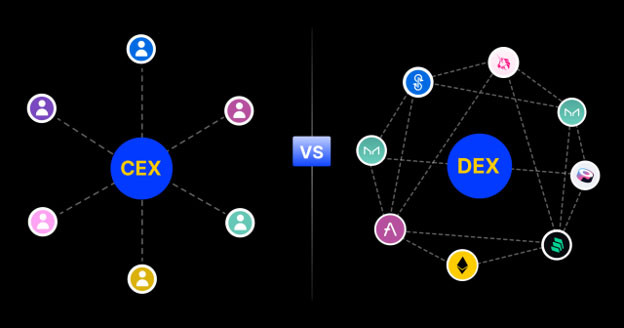
A centralized exchange (CEX) is run by a company. Think of it like a bank for crypto - there's a team behind it, a corporate structure, and a legal address somewhere in the world. Users create accounts, verify their identities, and trade on a platform that holds their funds in custodial wallets. The company controls the order books, the fees, and the withdrawal limits.
A decentralized exchange (DEX) works differently. There's no central authority managing your funds. Trades happen through smart contracts on a blockchain, and users keep control of their own wallets at all times. No company holds your money. And no customer support team to call if something goes wrong.
The centralized vs decentralized exchange debate comes down to one core trade-off: convenience and regulation on one side, control and privacy on the other. Some users are willing to hand over a passport scan in exchange for a slick interface and fiat on-ramps. Others are actively looking for platforms that don't require identity verification at all - including options like a crypto casino no KYC setup that allows interaction with digital assets without a full data handover. BetFury is one such platform operating in this space.
Crypto Compliance in 2026: Where Things Stand
How Regulators Have Tightened the Rules
Regulatory pressure on the crypto industry has grown considerably over the past few years. In 2026, most major jurisdictions - including the EU, the US, and the UK - require CEXs to follow strict anti-money laundering (AML) and know-your-customer (KYC) rules. Platforms operating in these regions must collect user data, report suspicious transactions, and in some cases share information directly with government agencies. This isn't really a surprise. Centralized exchanges have corporate structures that make them easy targets for regulation. They have legal entities, identifiable leadership, and physical presence in some cases. Regulators know who to hold accountable. So the compliance burden falls almost entirely on CEX operators, who pass most of it on to users in the form of ID checks, address verification, and source-of-funds documentation.
DEXs and the Compliance Gray Zone
Decentralized exchanges occupy a far murkier position. Because there's no central operator, it's genuinely unclear who a regulator would even go after. Some jurisdictions have tried to hold DEX developers or governance token holders accountable, but enforcement has been inconsistent at best.
Some DEX protocols have started adding optional front-end compliance tools - like wallet screening or geo-blocking for certain regions - as a way to preemptively satisfy regulators. But the underlying smart contracts remain permissionless. Anyone with a wallet and an internet connection can still interact with them directly.
For users who prioritize crypto compliance on paper, CEXs are the safer and more straightforward option. For those who'd rather skip the paperwork, DEXs still offer a path - at least for now.
Privacy: A Tale of Two Models
What CEXs Know About You
When you sign up for a centralized exchange, you hand over a lot. Full name, government-issued ID, home address, sometimes a selfie, and sometimes proof of income. That data is stored by the company, potentially shared with partners, and subject to data breaches. There have been multiple high-profile leaks from major CEXs over the years, exposing user information to hackers.
And it doesn't stop at sign-up. CEXs monitor transaction patterns, flag unusual activity, and maintain records that can be subpoenaed by law enforcement. Your entire trading history is sitting in a database, linked to your real identity. That's probably fine for most people - but it's a genuine concern for users in countries with unstable legal systems or governments that treat financial activity as a political matter.
What DEXs Know About You
Basically nothing. DEXs don't require registration. There's no email address, no name, no ID on file. Trades are pseudonymous - recorded on the blockchain but tied to a wallet address rather than a real-world identity. In theory, anyone who can link your wallet to your identity (through on-chain analysis or a connected CEX withdrawal) could deanonymize you. But the baseline level of privacy on a DEX is considerably higher than on a centralized platform.
The KYC Question
KYC is probably the single biggest point of friction between CEXs and their users. It's time-consuming, it feels invasive, and it creates a permanent link between your identity and your financial activity. Is that really the kind of footprint you want to leave?
CEXs defend it for understandable reasons. KYC requirements are a legal condition of operating in most major markets. Without them, exchanges risk losing their licenses, getting fined, or being shut down. So it's not really optional for them.
DEXs, for their part, don't have this problem - which is exactly why they've attracted users who've grown frustrated with verification processes. But DEXs also don't offer the same protections. If you lose access to your wallet, get scammed, or make an error in a transaction, there's no company to appeal to. None.
Trade-offs at a Glance
Feature |
Centralized Exchange (CEX) |
Decentralized Exchange (DEX) |
| KYC Required |
Yes (in most cases) |
No |
| Custodial Funds |
Yes |
No |
| Regulatory Compliance |
High |
Low to moderate |
| Privacy Level |
Low |
High |
| Ease of Use |
High |
Moderate to low |
| Customer Support |
Yes |
No |
| Liquidity |
Generally higher |
Varies by protocol |
Neither column is a clear winner. It depends entirely on what the user is trying to do.
What's Changing in 2026
Regulators in several jurisdictions are now looking at ways to bring DEXs into the compliance fold. The EU's MiCA regulation has provisions that might extend to certain DeFi protocols, and the US has seen ongoing debates about how to classify decentralized platforms. Whether this will meaningfully change how DEXs operate - or just push activity further into unregulated territory - remains to be seen.
At the same time, CEXs are experimenting with zero-knowledge proof systems that might allow identity verification without exposing actual personal data. Interesting concept. Hard to implement at scale.
The DEX vs CEX divide probably isn't going away. If anything, regulatory pressure on centralized platforms seems to be pushing more users toward decentralized alternatives - even with all their complications. BetFury and similar platforms that operate without mandatory identity requirements have picked up on this shift, and their user numbers seem to reflect it.
|