Getting a NSW Coastal Holiday House Ready for Summer: Roof, Cooling and Running Costs
Every October the same thing happens up and down the NSW coast. Owners open the holiday house for the first time since Easter, find a ceiling stain in the back bedroom, discover the air conditioner in the living room now sounds like a boat motor, and realise the first paying guests arrive in six weeks. The tradies they ring are already booked.
If you own or manage a holiday house anywhere from the Northern Beaches to the South Coast, this is the checklist to work through now, while there is still time to get someone out. Most of it is roof and cooling, because those are the two things that generate the complaints, the refunds and the bad reviews.
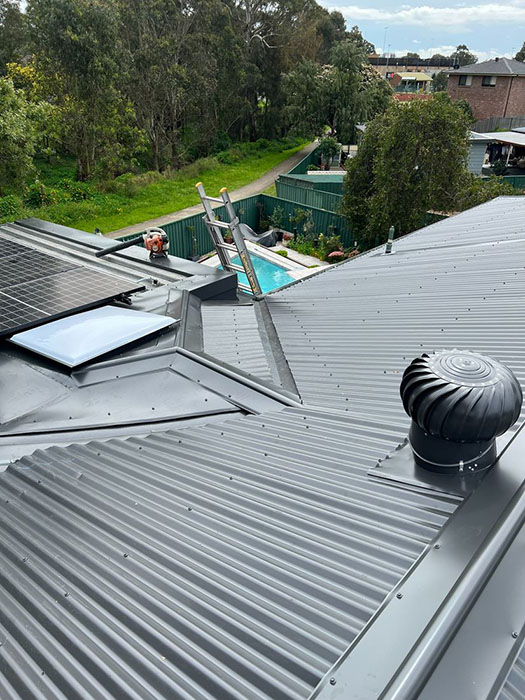
1. Walk the roof line before you do anything else
You do not need to climb up. Stand across the street and look for tiles that sit higher than their neighbours, ridge capping with gaps in the mortar, rust streaks running down from a flashing, and gutters that visibly sag. Then go inside, open every cupboard that backs onto an external wall, and look up. Water marks on ceilings and the tops of walls are the roof telling you where it leaks.
Coastal houses fail differently to suburban ones. Salt air eats valley irons and gutter joins, so metal that would last 30 years inland can rust through in 15. Sea winds lift ridge capping and drive rain sideways under tiles that were never designed for it. If the house is on the Northern Beaches, where most of the stock is 1960s and 70s tile under heavy exposure, a specialist in roof repairs on the Northern Beaches will know those failure points before they get up the ladder. A roof inspection with photos typically runs free with a quote, and repairs on a tile roof start at around $700.
2. Clean the gutters, then look at what came out
Blocked gutters are behind more holiday house leaks than any roofing fault. Leaf litter from a summer of nobody being there backs water up under the tiles at the eaves, and the first storm of the season puts it straight through the ceiling. Clean them in October, and pay attention to what you pull out. Grit and sand from concrete tiles means the tile surface is wearing. Flakes of rust mean the gutter itself is on its last season.
If the house has a rainwater tank, this matters twice over, because whatever is in the gutter ends up in the tank.
3. Decide whether this is the year to re-roof
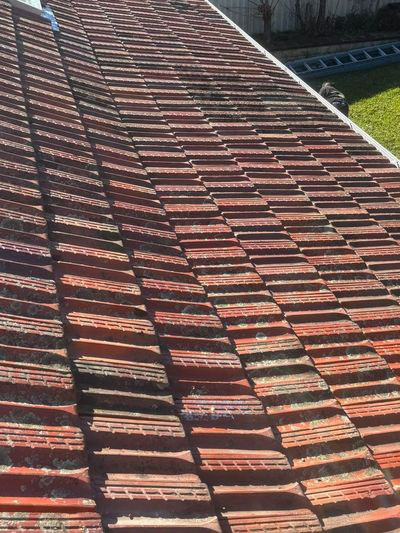
There is a point where repairing an old tile roof every year costs more than replacing it, and holiday houses tend to reach that point earlier because nobody is there to notice the small problems. The usual signs are three or more leaks in different spots, tiles that crumble when handled, and sarking that has perished to dust.
On the coast, replacing a tired tile roof with Colorbond is the common answer, and for good reason. It is lighter, it sheds leaves instead of catching them, and the light colours reflect enough heat to make a noticeable difference to the bedrooms upstairs in January. Current supply and install rates in Sydney run from about $170 per square metre, which puts a typical single storey coastal house in the $35,000 to $45,000 range including removal of the old roof and new sarking. That is real money, but it is also 30 to 50 years of not thinking about the roof, and it photographs well in the listing.
4. Run the air conditioning for 20 minutes on a warm day
Do not wait for a guest to tell you it does not work. Turn each unit to cold, leave it 20 minutes, and check three things: does the room actually get cold, does the indoor unit drip, and does the outdoor unit rattle or scream. Then pull the filters out of the indoor unit and rinse them in the laundry sink. A clogged filter is the single most common reason a holiday house air conditioner "stopped working" over summer.
Have a look at the outdoor unit while you are there. On a coastal block the aluminium fins corrode and the coil goes white and furry. Once that starts the unit loses capacity every year and usually dies in the first proper heatwave, which is exactly when the house is full.
5. If a unit needs replacing, use the NSW rebate
This is the one most holiday house owners miss. The NSW Energy Savings Scheme puts a discount on new and replacement air conditioners installed by an accredited provider, and holiday houses and investment properties are eligible, not just the owner's home. The discount comes off the installed price on the day rather than being claimed back later, the installer handles the paperwork, and it covers both split systems and ducted.
How much depends on the unit size and whether it replaces an old one. For a typical 7 kW split system in a living area it is a few hundred dollars, and larger ducted systems attract more. The catch is the unit has to be a high efficiency model on the approved list, which rules out the cheapest ones on the market. On a coastal house that is no loss. You can check what a particular property qualifies for through the NSW air conditioning rebate page, which is an independent service rather than a government site, by putting in the postcode and what is there now.
Size it for the room, not the price tag. The most common mistake in beach houses is a 2.5 kW unit in a north facing living room with glass doors. It runs flat out all afternoon and never gets there, and the guests leave the review you do not want.
6. Book the trades by early November
Roofers and air conditioning installers on the coast are quiet in October and gone by late November. A quote in October and an install booked for the first half of November means the house is sorted before the Christmas changeover. Leave it until December and you are doing what everyone did last year, which is buying pedestal fans from the nearest Bunnings and hoping for a southerly.
The short version
- Look at the roof from the street and the ceilings from inside. Stains mean leaks.
- Clean the gutters now and read what comes out of them.
- Three leaks in different places on an old tile roof is a replacement conversation, not a repair one.
- Run every air conditioner for 20 minutes and clean the filters.
- Replacing a unit? The NSW rebate applies to holiday houses and comes off the price on the day.
- Book trades for early November. December is too late.
A holiday house that is dry, cool and quiet in January books itself for the following year. The work to get it there is a few hours in October and a couple of trades who are not yet flat out.
|